

Why do so many high-potential teams collapse under pressure? Because they rely on a single, rigid structure for every challenge—like forcing a “rush” strategy onto a “stealth” mission. Different objectives demand different team compositions. This guide approaches team building like a high-stakes multiplayer strategy session, not a dry business manual. You’ll learn how to assess your squad’s mission type and deploy the right formation—whether that’s a tightly coordinated ‘raid’ or a flexible agile ‘5-stack’. Backed by proven multiplayer strategy principles and real competitive insights, this playbook shows you how to adapt, optimize, and consistently secure the win.
The Unskippable Tutorial: Core Mechanics of Any Elite Team
As you explore the intricacies of team composition, it’s essential to understand How Cross-Platform Play Is Changing the Online Gaming Landscape, allowing diverse player strategies to blend in thrilling new ways.
Every elite squad, whether in ranked ladder matches or high-stakes raids, runs on the same backbone: role clarity. I’m convinced most failed teams don’t lose to mechanics—they lose to confusion.
Role Specialization (The Holy Trinity)
The classic trio—Tank, DPS, Healer/Support—isn’t just MMO jargon. The Tank absorbs pressure and initiates. The DPS (damage per second) executes core tasks and secures eliminations. The Healer/Support removes blockers and stabilizes morale. When players ignore team composition strategies and “flex” mid-match without warning, chaos follows (and yes, we’ve all seen that one teammate go rogue). Know your lane. Master it.
Communication Protocols (Voice Comms)
Clear comms win games. “Shot-calling” means giving strategic direction—rotate, push, disengage. “Callouts” are tactical updates—enemy flanking, cooldown burned, objective at 50%. Mixing them up creates noise. Keep it tight. Keep it actionable.
- Prioritize clarity over volume
- Confirm critical information briefly
Shared Objective (The Win Condition)
If your team can’t define the win condition in one sentence, you’re already behind. Is success capturing the flag, defeating the boss, or surviving the final circle? Ambiguity kills performance. Alignment fuels momentum. In my experience, teams that obsess over a single clear objective outperform mechanically superior squads every time.
The “Raid Boss” Formation: The Hierarchical Structure for Complex Missions
Think of this structure like a 25-person MMO raid. One Raid Leader calls the shots. Beneath them, Officers command sub-groups—tanks, healers, DPS—each executing tightly defined roles. That’s the essence of a hierarchical model built for scale. Clear authority prevents chaos when stakes are high.
This works best for long-term, complex missions with predictable outcomes: major product launches, infrastructure overhauls, or entering a new market. In other words, when success depends on precision more than improvisation (think World of Warcraft’s Icecrown Citadel, not a sandbox survival game).
Why It Works
- Clear chain of command
- Efficient resource allocation
- Unified strategic direction
- Strong team composition strategies
| Role | Responsibility | Risk if Weak |
|---|---|---|
| Raid Leader | Strategy & final decisions |
Bottlenecks |
| Officers | Tactical execution | Misalignment |
| Members | Task completion | Delays |
Critics argue hierarchies slow innovation. Fair point. If the leader is overwhelmed, decisions stall. What’s next? Build contingency officers, define escalation paths, and invest in leadership bandwidth before complexity spikes.
The “5-Stack” Gambit: The Agile Pod for Dynamic Battlefields
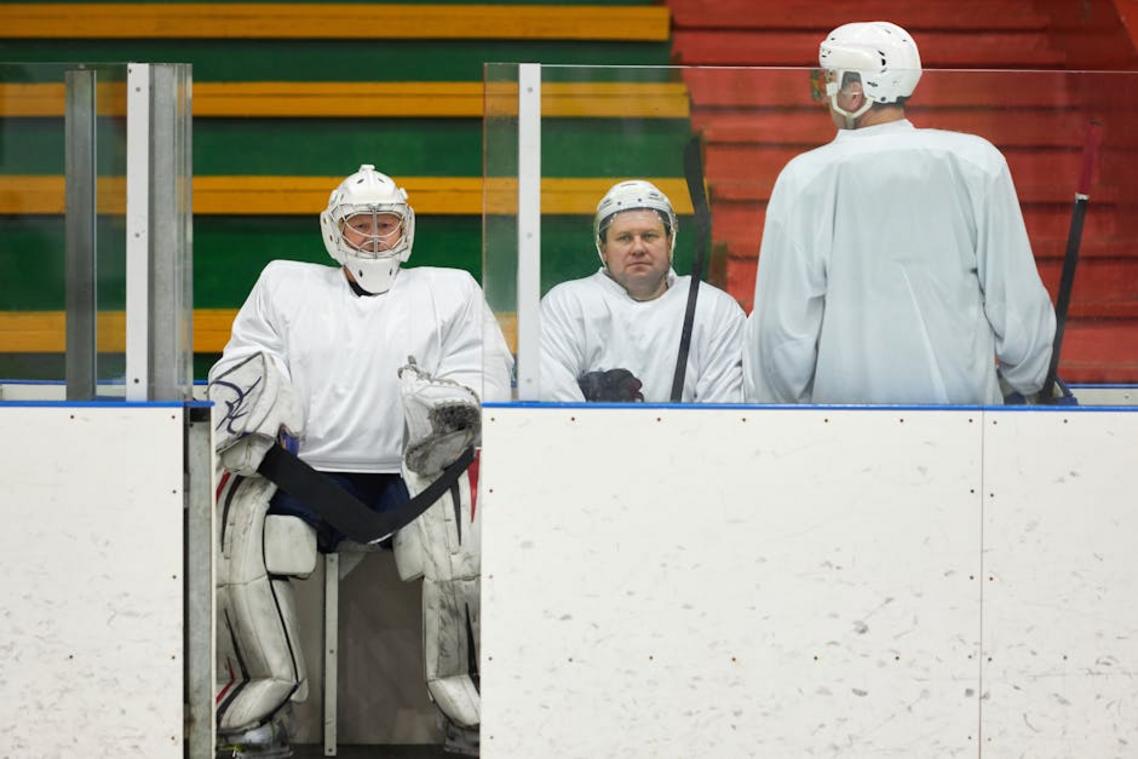
Think of the “5-Stack” Gambit like a competitive Valorant or League of Legends squad: five players, defined roles, constant adaptation. In esports, top-tier teams adjust strategy mid-match based on enemy positioning and economy swings—much like agile pods reacting to shifting market or product demands. This structure thrives in fast-paced environments such as software sprints, content marketing launches, or rapid response units.
Research from the Project Management Institute shows that agile organizations are 64% more likely to successfully meet project goals compared to traditional models (PMI, 2023). That edge comes from tight feedback loops and rapid decision-making. In practice, daily standups mirror in-game callouts—quick, precise, actionable.
However, some argue this model sacrifices long-term planning for speed. Without a clear shot-caller (think in-game IGL or product owner), direction can fragment. That concern is valid. Yet high-performing pods offset this risk through clear objectives and refined team composition strategies in the section once exactly as it is given.
Ultimately, cohesion is the multiplier. Just as mastering advanced map control tactics for online strategy matches elevates competitive play, synchronized pods dominate dynamic battlefields.
The “Battle Royale” Squad: The Hub-and-Spoke for Expert Operators
Think of this model like a battle royale endgame. Every player can loot, rotate, and clutch solo—but when the circle closes, they converge with precision. That’s the Hub-and-Spoke team.
It works best for senior specialists operating in parallel: territory-based sales reps, freelance designers, or consultant panels. Each member owns their lane, yet aligns on shared objectives using clear team composition strategies.
Key strengths:
- Maximizes autonomy without slowing execution
- Scales easily across regions or specialties
- Ideal for parallelized, high-skill tasks
Competitors often frame this as “loose collaboration.” That misses the edge: structured convergence points. Scheduled syncs, shared dashboards, and defined escalation paths turn lone wolves into a coordinated strike force (think Apex Legends final ring, not random matchmaking).
The counterargument? Autonomy breeds silos. True—if unmanaged. Without tight communication rhythms, synergy collapses.
Handled well, though, this model unlocks elite output while preserving individual mastery—a rare competitive advantage.
Choosing Your Loadout: Matching Structure to the Mission
“What’s the objective?” your squad asks. Start with a quick checklist:
- Complex but stable? Think Raid Boss—clear roles, layered coordination, long planning.
- Fast-paced and unpredictable? Go 5-Stack—tight comms, rapid pivots, shared awareness.
- Individual expertise heavy? Battle Royale mode: autonomy wins.
“I hate rigid structures,” one teammate told me. Fair. Critics argue strict formats slow creativity. But without defined team composition strategies, chaos creeps in.
Try hybrid builds: plan like a Raid Boss, then sprint as a 5-Stack. “Switch when the match shifts,” your IGL says. Adaptability is the real meta, right?
From Theory to Victory Screen
The best teams don’t win because they’re stacked with talent—they win because they’re built for the mission in front of them. Skill matters, but structure decides how that skill shows up under pressure. When you approach every challenge like a strategist, you stop guessing and start engineering outcomes.
Choosing between a hierarchical, agile, or autonomous model gives you control over how your squad communicates, adapts, and executes. That’s how good teams become dominant ones.
Stop defaulting to a generic org chart. Break down your next objective, select the right formation, and lead your squad straight to its next victory screen.
 There is a specific skill involved in explaining something clearly — one that is completely separate from actually knowing the subject. Terry Colemoniero has both. They has spent years working with multiplayer strategy breakdowns in a hands-on capacity, and an equal amount of time figuring out how to translate that experience into writing that people with different backgrounds can actually absorb and use.
Terry tends to approach complex subjects — Multiplayer Strategy Breakdowns, Gaming Setup Optimization Tips, Pro Tips Collection being good examples — by starting with what the reader already knows, then building outward from there rather than dropping them in the deep end. It sounds like a small thing. In practice it makes a significant difference in whether someone finishes the article or abandons it halfway through. They is also good at knowing when to stop — a surprisingly underrated skill. Some writers bury useful information under so many caveats and qualifications that the point disappears. Terry knows where the point is and gets there without too many detours.
The practical effect of all this is that people who read Terry's work tend to come away actually capable of doing something with it. Not just vaguely informed — actually capable. For a writer working in multiplayer strategy breakdowns, that is probably the best possible outcome, and it's the standard Terry holds they's own work to.
There is a specific skill involved in explaining something clearly — one that is completely separate from actually knowing the subject. Terry Colemoniero has both. They has spent years working with multiplayer strategy breakdowns in a hands-on capacity, and an equal amount of time figuring out how to translate that experience into writing that people with different backgrounds can actually absorb and use.
Terry tends to approach complex subjects — Multiplayer Strategy Breakdowns, Gaming Setup Optimization Tips, Pro Tips Collection being good examples — by starting with what the reader already knows, then building outward from there rather than dropping them in the deep end. It sounds like a small thing. In practice it makes a significant difference in whether someone finishes the article or abandons it halfway through. They is also good at knowing when to stop — a surprisingly underrated skill. Some writers bury useful information under so many caveats and qualifications that the point disappears. Terry knows where the point is and gets there without too many detours.
The practical effect of all this is that people who read Terry's work tend to come away actually capable of doing something with it. Not just vaguely informed — actually capable. For a writer working in multiplayer strategy breakdowns, that is probably the best possible outcome, and it's the standard Terry holds they's own work to.