
If you’re looking to gain a competitive edge in today’s fast‑paced multiplayer games, understanding the latest strategies and controller optimizations is no longer optional—it’s essential. Players aren’t just searching for surface‑level tips; they want actionable insights that improve reaction time, precision, and in‑game decision‑making. This article delivers exactly that.
We break down emerging console trends, advanced stick sensitivity adjustments, and practical setup tweaks that can immediately enhance performance. You’ll also discover how refined map control tactics can shift momentum in your favor, whether you’re competing in ranked matches or coordinated team play.
Our insights are built on extensive gameplay analysis, competitive match reviews, and hands‑on testing across multiple console environments. By combining technical controller mechanics with proven multiplayer strategies, this guide gives you clear, reliable steps to optimize your setup and elevate your gameplay with confidence.
Mastering the Mini-Map: Your Path to In-Game Dominance
Ever get eliminated by an enemy you never saw coming? Here’s the hard truth: the warning was probably glowing in the corner of your screen. Most players treat the mini-map as background noise. That’s a mistake.
Recommendations:
- Check it every five seconds.
- Adjust controller sensitivity for faster pings.
- Practice map control tactics during scrims.
It’s like using your mirrors while driving—ignore them and expect crashes. Pro tip: Lower HUD opacity slightly so icons pop. Do this consistently, and positioning, rotations, and objective timing become second nature. Win fights before they start consistently.
Mini-Map vs. Full-Screen Map
First, understand this: your HUD isn’t decoration—it’s intelligence. The mini-map is your split-second survival tool. It highlights immediate threats, nearby teammates, and sudden red dots that signal danger. In fast matches, reacting to that tiny corner display can mean the difference between clutching a win and watching the respawn timer tick down. By contrast, the full-screen map is your command center. Here, you plan rotations, track objectives, and anticipate enemy routes. In other words, one keeps you alive now; the other helps you win later.
The Language of Icons
To benefit fully, you must read icons instantly (hesitation is costly).
- Red dots or arrows: Enemy positions or gunfire indicators
- Blue/green markers: Teammate locations and status
- Objective symbols: Capture points, loot zones, or mission goals
- Ping markers: Real-time team communication
The faster you decode these, the faster you act—no second-guessing.
Fog of War and Vision
However, information isn’t constant. Fog of war hides unseen areas, while line-of-sight and vision cones determine what appears. When enemies vanish, infer movement using map control tactics and last-known positions. This predictive awareness gives you smarter rotations, safer pushes, and a consistent strategic edge.
Situational Awareness: Thinking Three Moves Ahead
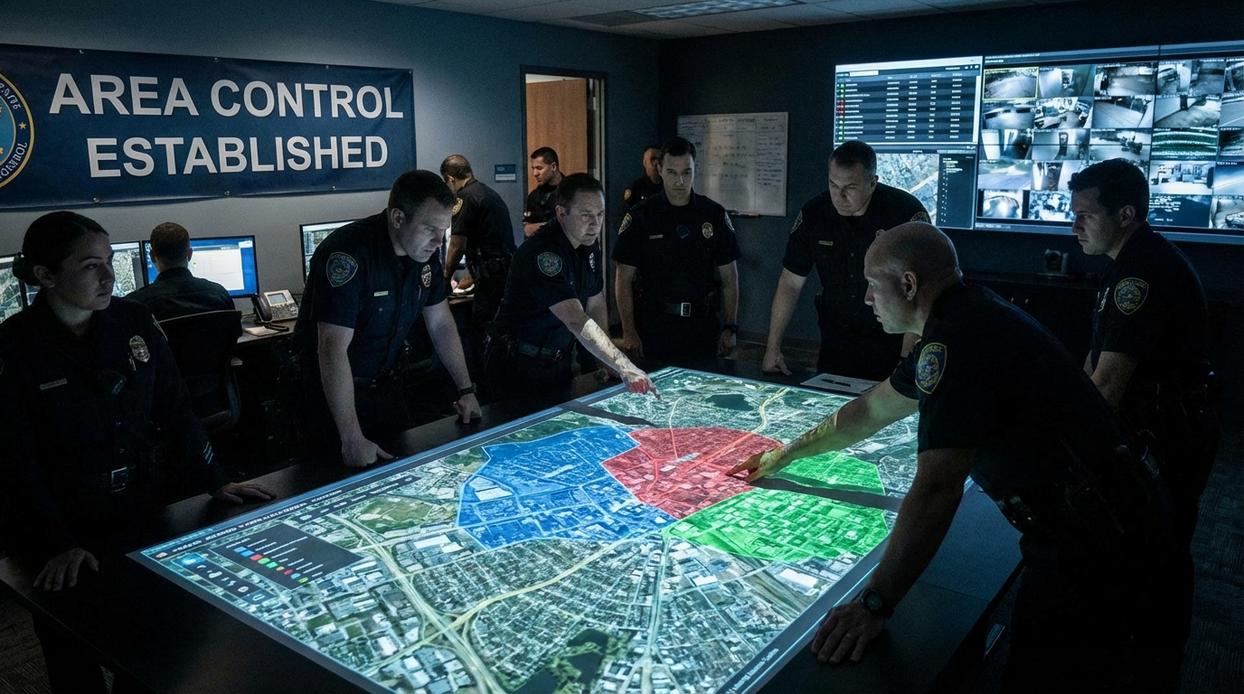
Great players don’t just react. They ANTICIPATE. That’s the difference between trading eliminations and controlling the entire lobby.
The “Quick-Glance” Technique
The mini-map is not background decoration. It’s live intelligence. Build the habit of glancing at it every 3–5 seconds—especially after a fight or when rotating to a new area. This isn’t about staring at the corner of your screen. It’s about absorbing patterns instantly.
Ask yourself: Who’s alive? Where are teammates clustered? Where are gaps forming?
If you just won a gunfight and see no allies nearby, expect pressure. Empty space invites enemies (like sharks to chum). Pro tip: tie your glance to reload animations so it becomes automatic.
Predicting Enemy Flow and Spawns
Red dots are reactive information. Real awareness means predicting movement before dots appear. Enemies tend to travel predictable lanes between objectives, power positions, and high-traffic choke points.
If your team stacks one side of the map, spawns often flip. That means enemies will likely appear opposite your strongest presence. Understanding map control tactics lets you cut off rotations instead of chasing them.
Think chess, not checkers. Where will they be in five seconds?
Combining Audio Cues with Map Data
Sound confirms suspicion. Hear footsteps on your left but see no dot? That likely means a suppressed weapon or stealth perk is in play. Gunfire without a visual indicator suggests distance or obstruction.
Cross-reference everything. Map plus audio equals clarity. Ignore one, and you’re guessing. Use both, and you’re predicting.
Stick Skills: Optimizing Your Controller for Map Control
Most players think map awareness is purely mental. It’s not. It’s mechanical. Your thumbs decide whether you live or respawn.
Thumbstick Discipline for Map Glancing
The fastest players don’t “check the map.” They flick-glance. Keep your left thumb steady on movement while your right thumb performs a quick lift-tap-return motion. The key is minimizing air time (yes, milliseconds matter). Think of it like a fighting game input—clean and deliberate. This micro-adjustment keeps strafing active, reducing vulnerability while gathering intel. Competitive players who practice this build subconscious rhythm, similar to checking mirrors while driving.
Custom Button Mapping for Accessibility
Default layouts waste motion. Map the full-screen map to a back paddle or low-priority face button. This shaves reaction time and supports faster map control tactics during rotations. It also pairs perfectly with strong team coordination—especially if you’re applying lessons from how to communicate effectively in squad based shooters.
Optimizing Map Scrolling Sensitivity
Most competitors ignore cursor sensitivity. That’s a mistake. Increasing map scroll speed enables faster route plotting and long-distance pings. Pro tip: raise sensitivity incrementally—too high sacrifices precision. Think sniper scope, not hyperspace jump.
Small mechanical optimizations create strategic advantages others never notice (until you’re already holding the high ground).
Start with an anecdote about clutching a ranked match because I stopped chasing red dots. In a fast-paced FPS, I learned spawn awareness beats ego. Beginners follow every ping; pros predict where enemies will rotate next. That shift is the core of map control tactics.
For Battle Royales, think bigger. The full map shows choke points — narrow passages that funnel squads into chaos. Plan rotations early, predict the next circle, and save the mini-map for close fights (yes, like that last ring in Fortnite).
In Open-World RPGs, efficient pathing — choosing the shortest, safest route — matters. Don’t blindly follow waypoints. Instead, use this simple framework:
- Scan for clustered objectives.
- Mark resource loops.
- Clear points of interest en route.
Pro tip: zoom out before every session. You’ll spot patterns faster, and stop playing on autopilot. Maps reward patience more than reflex alone. Every smart move compounds.
Effective map navigation blends quick glances, predictive thinking, and optimized controller settings. A “quick glance” means checking your minimap between actions, not staring at it. Predictive thinking is anticipating where enemies will rotate next. Optimized settings simply ensure your camera and stick sensitivity let you look fast without losing control.
Ignore the map, and you’re fighting blindfolded. That’s why map control tactics matter.
Focus on one habit per session:
- check the map after every engagement.
Through conscious practice, these skills become second nature, turning confusion into clarity and weakness into your greatest strength on the digital battlefield stage you command.
Master Your Setup and Start Winning More Matches
You came here to figure out how to sharpen your gameplay, optimize your setup, and gain a real edge in competitive matches. Now you understand how smarter configuration, refined mechanics, and map control tactics work together to turn average sessions into consistent wins.
The frustration of losing winnable matches, missing key inputs, or feeling one step behind your opponents doesn’t have to continue. Small adjustments to your controller setup and smarter in-game decisions can dramatically improve reaction time, positioning, and overall performance.
Here’s your next move: apply one optimization today. Tweak your sensitivity, refine your button layout, and actively practice map control tactics in your next session. If you want deeper strategies and step-by-step setup guidance, explore our latest competitive guides and optimization breakdowns.
We’re trusted by thousands of competitive players for practical, field-tested gaming insights that deliver real results. Don’t settle for average performance—upgrade your setup, refine your strategy, and start dominating your matches now.